

Comprehensive Guide to X-Ray Scanning Equipment Inspection and Safety
X-ray scanning equipment plays a pivotal role in modern society, spanning across critical fields such as medical diagnostics, airport security screening, and industrial non-destructive testing (NDT). Because these powerful machines utilize ionizing radiation to look beneath the surface of objects and human tissue, maintaining their operational integrity is not merely a matter of equipment longevity—it is a critical safety imperative. Regular, systematic inspections ensure that these devices perform precisely as designed without exposing operators, patients, or the general public to unnecessary radiation hazards.
Implementing a rigorous inspection protocol helps organizations detect microscopic structural wear, electrical anomalies, and shielding degradation before they escalate into dangerous failures or costly regulatory infractions. Standardized verification routines form the backbone of a proactive safety culture, minimizing downtime while maximizing diagnostic accuracy or security scanning throughput. By establishing a dedicated routine, facilities can confidently demonstrate safety compliance and safeguard their personnel.
To achieve this high level of safety, organizations must align their inspection procedures with leading oversight bodies. For instance, the United States Food and Drug Administration (FDA) regulates radiation-emitting products through the FDA Center for Devices and Radiological Health, which outlines strict performance standards for diagnostic, security, and industrial cabinet X-ray systems. Adhering to these federal regulations ensures that equipment operates within permissible emission limits and meets strict manufacturing benchmarks.
In addition to equipment-specific standards, occupational safety must remain at the forefront of any inspection program. The Occupational Safety and Health Administration (OSHA) enforces rigorous workplace guidelines to control worker exposure to ionizing radiation. Inspecting teams should consult the OSHA Ionizing Radiation Standard to ensure that radiation survey meters, personal dosimeters, and physical barriers comply with federal safety thresholds. Combining device compliance with worker protection standards creates a robust framework for hazard mitigation.
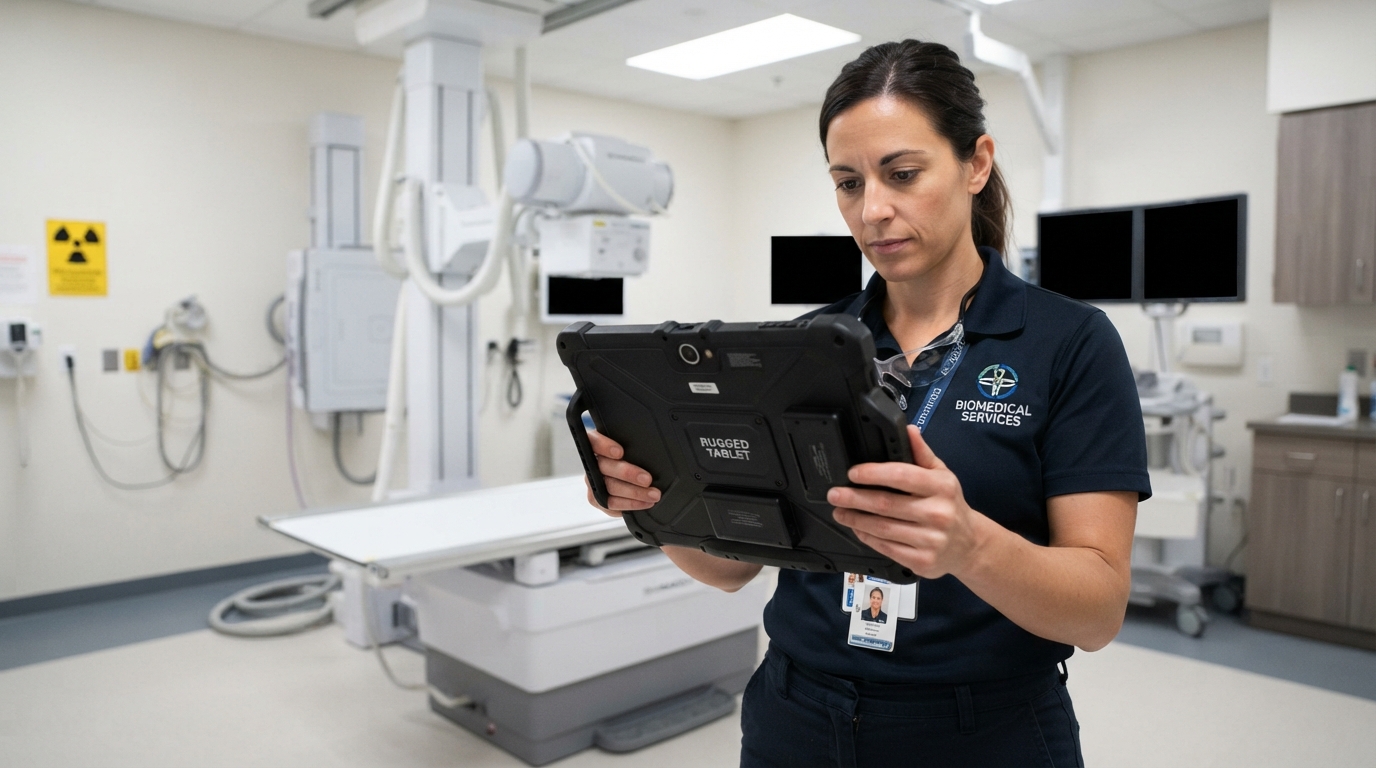
Key Technical Components of an X-Ray Inspection
A comprehensive X-ray inspection goes far beyond a simple visual check. It requires a systematic evaluation of several critical sub-systems that govern both the safety and performance of the equipment. Below are the primary technical areas that must be evaluated during every inspection cycle:
1. Radiation Shielding and Cabinet Integrity
For cabinet X-ray systems and security scanners, physical shielding is the primary defense against stray radiation. Inspectors must check the external panels, lead-lined vinyl curtains, and viewing windows for cracks, gaps, or physical wear. Radiation survey meters must be used to measure external leakage rates at specified distances from the enclosure to ensure they do not exceed regulatory limits.
2. Safety Interlocks and Warning Indicators
Interlocks are fail-safe mechanisms designed to instantly terminate X-ray production if an access panel or inspection door is opened. Each interlock switch must be individually tested for immediate response. Additionally, warning lights—such as the “X-Ray On” beacon—must be highly visible and perfectly synchronized with the activation of the X-ray tube.
3. Collimation, Beam Alignment, and Image Quality
The collimator restricts the X-ray beam to the desired area of interest, preventing unnecessary exposure to surrounding areas. Inspectors should verify that the light field aligns perfectly with the actual X-ray beam. Furthermore, running standardized phantom tests helps assess contrast resolution, spatial resolution, and overall image quality to ensure the detector array is functioning optimally.
4. Electrical Components and Cooling Systems
High-voltage generators power X-ray tubes, generating substantial heat. Inspectors must evaluate cables, connectors, and grounding wires for signs of insulation degradation or thermal stress. The cooling system, whether oil- or water-based, must be checked for proper fluid levels, flow rates, and signs of leakage to prevent catastrophic overheating of the anode.
Implementing an Effective Inspection Workflow
Consistency is the key to preventing technical drift and ensuring continuous safety. To streamline this complex process, technicians should utilize a specialized checklist that guides them through every mechanical, electrical, and radiological test point. By standardizing these checks, organizations can eliminate human error and maintain historical records for annual auditing purposes.
For facilities looking to establish or refine their quality control program, utilizing a structured, downloadable tool is highly recommended. You can access the professional X-Ray Scanning Equipment Inspection Checklist to immediately standardize your testing procedures and keep your team aligned with compliance mandates. Using this digital or printable resource ensures that no critical safety step is overlooked during routine preventive maintenance.
Global Best Practices and Safety Standards
Beyond local regulations, aligning with international guidelines offers an additional layer of safety assurance, particularly for multinational corporations or high-security facilities. The International Atomic Energy Agency (IAEA) Safety Standards provide a globally accepted benchmark for radiation protection and safety of radiation sources. Integrating these international best practices into your standard operating procedures ensures your inspection program remains resilient against emerging global risks and technological advancements.
Furthermore, regular calibration of test instruments—such as ion chambers and semiconductor detectors—must be scheduled in tandem with equipment inspections. A safety inspection is only as accurate as the tools used to measure the radiation. Keeping detailed calibration logs, alongside your completed checklists, builds a bulletproof safety portfolio that protects your organization from liability and regulatory penalties.
Conclusion
Maintaining X-ray scanning equipment is a multi-faceted responsibility that directly impacts human health, operational security, and regulatory compliance. By combining strict adherence to federal standards like those from the FDA and OSHA with international guidelines from the IAEA, organizations can establish a safe, highly efficient operating environment. Utilizing structured tools like the X-Ray Scanning Equipment Inspection Checklist ensures that your technicians perform highly accurate, repeatable inspections that prolong equipment life and guarantee absolute safety for everyone involved.