

Top 50 Mining Companies Add $250 Billion Amid 2026 Iran War
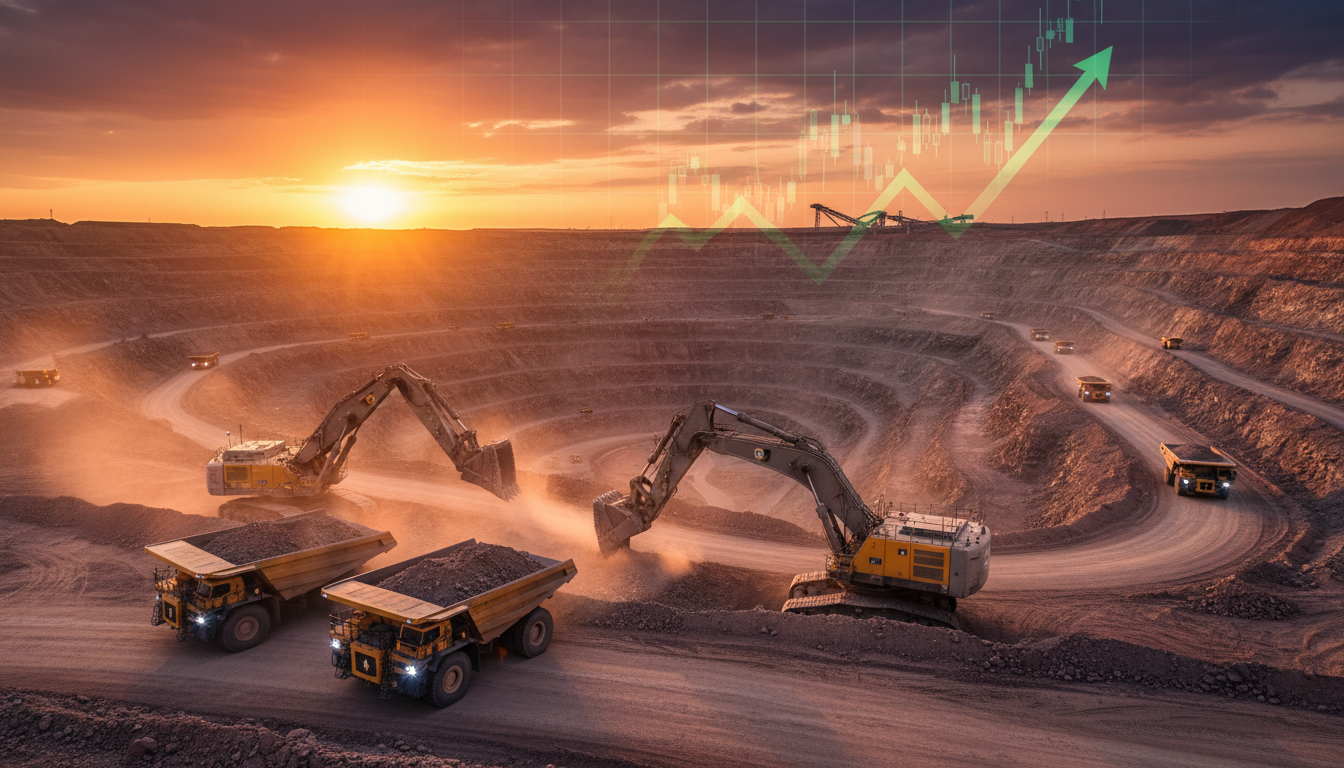
In the tumultuous economic landscape of early 2026, global markets braced for catastrophic fallout as the Iran war escalated, threatening vital supply chains and energy corridors. The sudden geopolitical shock sent ripples through major financial hubs, triggering a flight to safety and widespread panic across traditional industrial sectors. Yet, against all conventional macroeconomic predictions, the global mining sector not only survived the volatility but emerged as a dominant financial fortress. The world’s top 50 mining companies demonstrated unprecedented resilience, powering through the conflict to add a staggering $250 billion in collective market capitalization over the course of the year.
This extraordinary financial feat was not merely a byproduct of speculative trading, but rather the result of a profound structural shift in global resource dependency. As international borders tightened and the flow of raw materials was weaponized, nations scrambled to secure domestic stockpiles of critical minerals. The immediate consequence was a massive surge in commodity prices, particularly for base metals, rare earth elements, and precious metals. Investors quickly realized that mining conglomerates holding diversified, tier-one assets in politically stable jurisdictions were essentially printing cash amid the chaos, transforming mining equities into the ultimate safe haven.
Furthermore, the conflict underscored the urgent need for energy independence and the continued funding of the green energy transition, ironically accelerating demand for copper, lithium, and nickel. Defense contractors, ramping up production to meet wartime demands, further strained the supply of specialty alloys and industrial metals. The convergence of these factors created a perfect storm of demand for the top 50 mining giants, who were strategically positioned to capitalize on the supply-demand imbalance. Their robust balance sheets, forged during the lean years of the early 2020s, allowed them to absorb sudden spikes in operational costs while passing premiums onto desperate buyers.
However, capitalizing on this demand required extraordinary operational agility. Mining companies had to navigate crippled shipping lanes, skyrocketing insurance premiums, and the constant threat of localized disruptions. The ability to maintain uninterrupted production schedules while safeguarding thousands of workers became the primary differentiator between the industry leaders and the laggards. Management teams across the top 50 deployed advanced predictive analytics and decentralized supply networks to keep their fleets running, proving that their colossal market gains were rooted in fundamental operational excellence as much as favorable commodity pricing.
The Macroeconomic Catalysts Behind the $250 Billion Surge
To understand the magnitude of this $250 billion market capitalization surge, one must examine the specific macroeconomic catalysts triggered by the Middle Eastern conflict. The disruption in the Strait of Hormuz immediately throttled global energy supplies, causing crude oil and natural gas prices to spike. For mining companies, energy typically represents one of the largest operating expenses. However, the top-tier firms had strategically transitioned significant portions of their energy grids to localized renewables and signed long-term, fixed-price power purchase agreements prior to 2026. For comprehensive insights into domestic and global energy metrics during this crisis, analysts frequently relied on data from the U.S. Energy Information Administration (EIA) to forecast fuel cost trajectories and energy market volatility.
The Flight to Precious Metals
As fiat currencies in emerging markets faced hyperinflationary pressures due to the war, gold and silver resumed their historical roles as ultimate stores of value. The top gold producers within the top 50 index saw their margins expand exponentially as the spot price of gold shattered previous records. This wasn’t merely a retail phenomenon; central banks accelerated their gold purchasing programs to diversify their reserves away from weaponized currencies, providing a solid floor for precious metal prices throughout the conflict.
Strategic Minerals and Defense Industry Demand
Beyond precious metals, the war in Iran fundamentally altered the consumption patterns of strategic and critical minerals. Modern warfare relies heavily on advanced electronics, guided munitions, and aerospace technologies—all of which require intensive inputs of rare earth elements, titanium, and specialized steel alloys. Allied nations recognized their vulnerability to supply chain shocks and initiated massive procurement programs to build strategic stockpiles. Organizations like the USGS National Minerals Information Center played a pivotal role in tracking global mineral flows and identifying critical vulnerabilities in domestic supply chains, prompting governments to fast-track permitting for new mining projects and offer lucrative subsidies to established operators.
Copper, often referred to as ‘Dr. Copper’ for its ability to diagnose the health of the global economy, saw unprecedented demand. The dual pressures of military manufacturing and the ongoing, albeit strained, global electrification mandate meant that copper inventories plummeted to critically low levels. Mining companies with producing copper assets in the Americas and Australia became the darlings of institutional investors, driving a significant portion of the $250 billion sector-wide valuation increase.
Maintaining Safety and Operational Excellence Under Pressure
The financial windfall of 2026 did not come without immense internal challenges. With commodity prices at all-time highs, the pressure to maximize throughput and accelerate extraction rates was immense. However, seasoned mining executives knew that compromising on safety to chase short-term profits could lead to catastrophic operational halts, reputational damage, and severe regulatory penalties. Ensuring workplace safety remained the paramount objective, even as production targets were aggressively revised upward.
Regulatory bodies intensified their oversight to prevent wartime profiteering from eroding worker safety standards. In the United States, the Mine Safety and Health Administration (MSHA) maintained rigorous enforcement of health and safety regulations, ensuring that the frantic pace of production did not lead to an increase in workplace fatalities or injuries. Compliance with these stringent standards required meticulous planning, continuous training, and the implementation of robust internal auditing processes.
To manage this delicate balance between hyper-production and absolute safety, mining operations relied heavily on standardized safety protocols and rigorous site inspections. Utilizing resources like a general mining workplace inspection checklist allowed site managers to systematically identify potential hazards, maintain heavy machinery under extreme wear-and-tear, and ensure that all personnel were adhering to critical safety guidelines. By institutionalizing these daily safety checks, the top 50 mining companies managed to keep their operations running at peak capacity without sacrificing the well-being of their workforce.
Strategic Mergers and Acquisitions in a High-Stakes Environment
The accumulation of massive cash reserves by the top 50 mining companies sparked a wave of strategic consolidation in the latter half of 2026. Rather than issuing reckless special dividends, forward-looking boards of directors utilized their inflated equity valuations and cash piles to acquire high-quality, distressed assets from smaller, less capitalized junior miners who could not survive the localized supply chain disruptions. This aggressive M&A strategy allowed the giants to replenish their depleting reserves, expand their geographical footprints, and secure decades of future production at relatively depressed valuations.
Navigating ESG Commitments Amidst Geopolitical Crisis
Interestingly, the geopolitical crisis did not entirely derail the industry’s Environmental, Social, and Governance (ESG) commitments. While some critics feared that the war would provide cover for companies to abandon their net-zero targets, the top-tier miners doubled down on sustainable extraction methods. Water conservation technologies, autonomous electric hauling fleets, and community reinvestment programs were heavily funded. These companies understood that maintaining their ‘social license to operate’ was crucial for long-term stability, especially when governments were exercising increased scrutiny over strategic national resources.
Conclusion: The New Era of Mining Dominance
The year 2026 will be recorded in economic history as a watershed moment for the global mining industry. The ability of the top 50 mining companies to power through the devastating geopolitical shocks of the Iran war and add $250 billion to their collective market capitalization is a testament to the indispensable nature of raw materials in the modern world. By leveraging robust operational frameworks, prioritizing worker safety, capitalizing on the desperate demand for strategic minerals, and executing disciplined financial strategies, these industrial titans transformed a global crisis into an era of unprecedented prosperity. As the world slowly transitions toward a post-conflict recovery phase, the mining sector stands fundamentally restructured—stronger, more consolidated, and unequivocally central to the future of global economic stability and technological advancement.