

The Complete Guide to Playground Equipment Inspections: Safety, Standards, and Checklists
Every year, millions of children enjoy public and private playgrounds, finding joy, exercise, and social interaction in these dedicated play spaces. However, with the physical activity and dynamic environments comes an inherent risk of injury. Facility managers, school administrators, homeowners’ associations (HOAs), and municipal parks departments carry the profound responsibility of ensuring these environments are as safe as possible. A proactive approach through rigorous, systematic safety audits is not just a best practice—it is a moral imperative and a legal necessity.
Playground injuries often result from poorly maintained equipment, inadequate protective surfacing, or outdated designs that fail to meet modern safety standards. According to emergency department data, hundreds of thousands of children are treated annually for playground-related injuries. A significant portion of these incidents could be prevented with routine safety inspections and timely maintenance.
Implementing a standardized playground equipment inspection checklist is the foundation of an effective risk management strategy. By documenting conditions systematically, facility managers can identify wear and tear before it results in a critical failure, allocate maintenance budgets more effectively, and defend against potential liability claims with a clear paper trail of due diligence.
In this comprehensive guide, we will explore the critical importance of regular playground inspections, the national safety standards you must understand, the core components of a thorough safety evaluation, and how to establish an inspection frequency that ensures your play areas remain safe havens for children year-round.
The True Cost of Playground Negligence
Failing to inspect and maintain playground equipment can lead to catastrophic consequences. Beyond the immediate physical harm to a child, which is the primary concern, organizations face severe financial and reputational damage. Liability lawsuits stemming from playground injuries can result in massive settlements, increased insurance premiums, and a loss of community trust. A documented history of regular, comprehensive inspections is a facility’s best defense in demonstrating a commitment to safety and a lack of negligence. This requires not only performing the inspections but also acting upon the findings promptly.
Understanding National Playground Safety Standards
In the United States, playground safety is largely guided by two primary organizations. Failing to adhere to their guidelines can expose organizations to significant liability. Knowing these guidelines inside and out is mandatory for anyone involved in playground management.
CPSC Public Playground Safety Handbook
The Consumer Product Safety Commission (CPSC) provides the foundational guidelines for playground safety. Their comprehensive manual, the CPSC Public Playground Safety Handbook, outlines crucial recommendations regarding equipment design, layout, spacing, and protective surfacing. It is considered the industry standard of care, and courts often rely on CPSC guidelines to determine negligence in personal injury cases involving playgrounds.
ASTM International Standards
Working in tandem with the CPSC, ASTM International develops technical specifications for playground equipment manufacturing and performance. The most critical standard for public play areas is ASTM F1487 – Standard Consumer Safety Performance Specification for Playground Equipment for Public Use. This standard addresses hazards like head entrapment, sharp edges, and structural integrity under dynamic loads. Compliance with ASTM standards ensures the equipment itself is engineered safely before it is even installed.
Core Components of a Playground Equipment Inspection
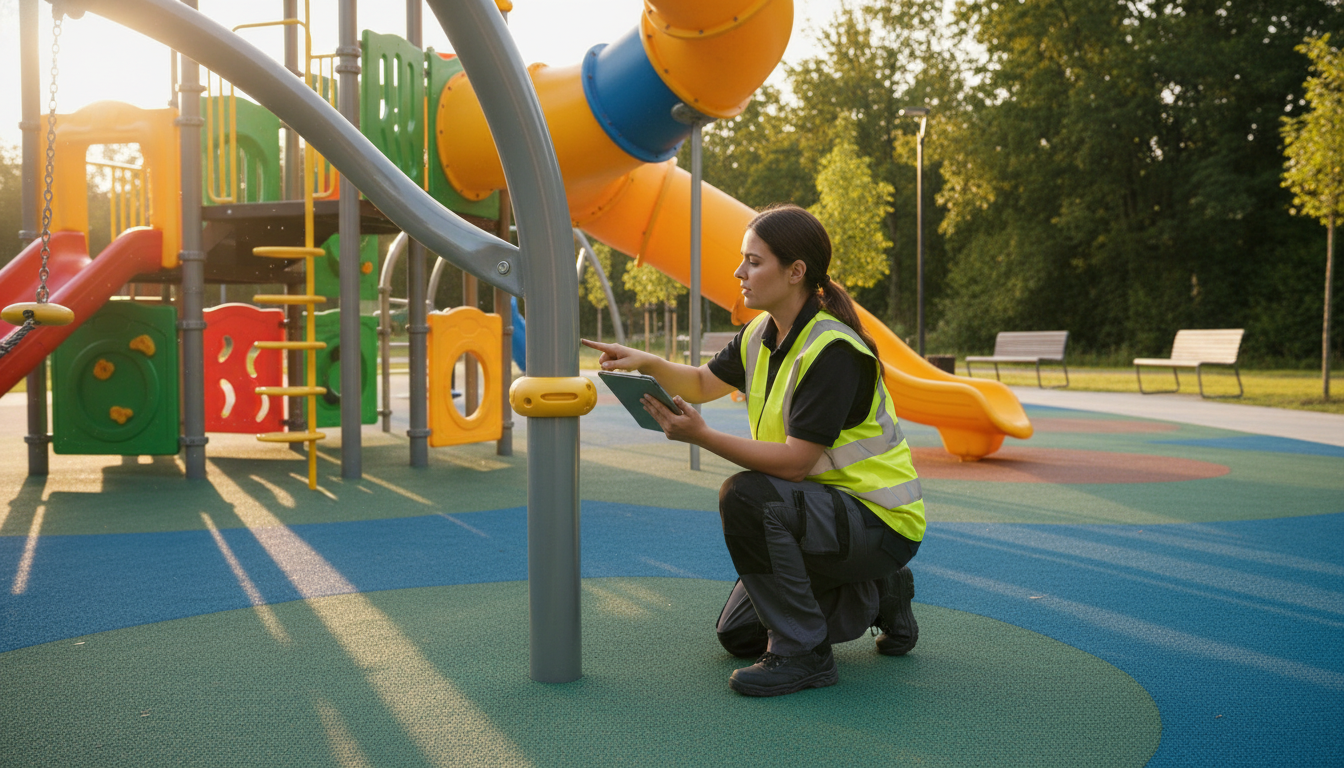
A thorough inspection goes beyond simply walking around the play area. It requires a meticulous evaluation of several critical elements using a reliable playground equipment inspection checklist.
1. Protective Surfacing and Fall Zones
The majority of severe playground injuries are caused by falls to the surface. Inspecting the protective surfacing is arguably the most important part of any audit. For loose-fill materials (like engineered wood fiber, sand, or pea gravel), inspectors must ensure the depth meets safety requirements based on the fall height of the highest equipment. These materials easily displace under heavy use, particularly under swings and at slide exits, requiring constant raking and topping up. Unitary surfaces, such as poured-in-place rubber or rubber tiles, must be checked for cracks, peeling, and hardening, which reduce their impact-attenuating properties.
2. Structural Integrity and Hardware
Continuous use and exposure to the elements take a toll on playground structures. Inspectors must look for signs of structural degradation. For metal equipment, this means checking for severe rust, corrosion, and sharp edges. For wooden structures, rot, splintering, and insect damage are primary concerns. Plastics should be examined for UV degradation, cracking, and fading. Furthermore, all hardware—including bolts, S-hooks, and shackles—must be secure, fully closed, and free from excessive wear.
3. Entrapment, Crush, and Shear Hazards
Children’s heads or bodies can become trapped in openings that are the wrong size. Inspectors use specialized probes to test openings, ensuring they do not pose a head entrapment hazard (generally openings between 3.5 and 9 inches are hazardous). Additionally, moving components like swings, track rides, and seesaws must be evaluated for potential crush or shear points that could catch a child’s fingers or clothing.
Establishing a Robust Inspection Schedule
Playground inspections should not be a once-a-year event. A comprehensive safety program incorporates multiple levels of inspection frequencies.
High-Frequency Routine Inspections
Often performed daily or weekly by custodial or maintenance staff, these visual checks focus on immediate hazards. Tasks include removing broken glass, trash, and debris, checking for obvious vandalism or broken equipment, and raking displaced loose-fill surfacing back into high-traffic areas.
Low-Frequency Maintenance Inspections
Conducted monthly or quarterly, these are more detailed evaluations that utilize a specific playground equipment inspection checklist. Inspectors will check hardware tightness, measure surfacing depth, lubricate moving parts, and evaluate wear and tear on specific components.
Comprehensive Annual Audits
At least once a year, the playground should undergo a full safety audit performed by a Certified Playground Safety Inspector (CPSI). The National Recreation and Park Association (NRPA) offers the CPSI certification program, training professionals to rigorously identify hazards according to current ASTM and CPSC standards. This audit evaluates the overall design, compliance, and long-term viability of the play environment.
Best Practices for Documentation and Record Keeping
Conducting the inspection is only half the battle; documenting it properly is equally critical. Comprehensive record-keeping is your organization’s primary evidence of a proactive safety program in the event of an incident or liability claim. An effective documentation system should log the date of the inspection, the specific playground or equipment inspected, the name of the inspector, detailed findings (both positive and negative), and any corrective actions taken. Utilizing digital checklists and inspection management software can streamline this process, allowing for real-time reporting, photo attachments of identified hazards, and automated maintenance work order generation. Facilities should maintain these records for the lifespan of the equipment, plus any applicable statute of limitations for liability claims in their jurisdiction. This historical data is also invaluable for long-term capital planning, helping administrators predict when major components or complete play structures will require replacement due to repetitive maintenance issues or aging materials.
Conclusion
Playgrounds are vital spaces for childhood development, offering opportunities for physical exertion, imaginative play, and social growth. However, the safety of these environments cannot be taken for granted. Regular, systematic inspections are the frontline defense against preventable injuries and potential liability. By understanding CPSC and ASTM standards, focusing on critical areas like surfacing and hardware, establishing a multi-tiered inspection schedule, and empowering your staff with comprehensive checklists, you can ensure that your playground remains a safe, welcoming environment for all children to enjoy. Prioritizing playground safety today protects your community tomorrow.