

The Ultimate Guide to Greenhouse Operations Inspections: Maximizing Yields and Ensuring Safety
The agricultural landscape has undergone a massive transformation in recent years, heavily driven by the rapid expansion of Controlled Environment Agriculture (CEA). Commercial greenhouses stand at the forefront of this revolution, offering unprecedented control over climate, lighting, and nutrient delivery to maximize crop yields and extend growing seasons. However, operating a modern greenhouse is a complex, multi-disciplinary endeavor that combines advanced horticulture with industrial facility management. To sustain peak operational efficiency, mitigate costly equipment failures, and protect the well-being of the workforce, implementing a rigorous, structured inspection protocol is absolutely essential. An optimized facility requires constant vigilance, transforming routine checks from a tedious regulatory requirement into a strategic advantage that directly impacts the bottom line.
Without a systematic approach to facility auditing, minor maintenance issues can rapidly escalate into catastrophic failures. A malfunctioning ventilation fan or a slightly degraded shade curtain might seem inconsequential on day one, but over a week, these hidden defects can alter the microclimate enough to compromise an entire crop cycle. Furthermore, the modern greenhouse environment—characterized by high humidity, constant water flow, intricate electrical systems, and the application of various agricultural chemicals—presents unique, compounded risks to worker safety and structural integrity. Facility managers must look beyond just plant health and focus holistically on the infrastructure that makes indoor cultivation possible.
To effectively manage these complex variables and streamline the auditing process, modern facility operators should utilize a comprehensive greenhouse operations inspection checklist. By utilizing a standardized checklist, managers can ensure that no critical component—from the structural foundation to the apex of the roof vents—is overlooked during routine evaluations. This consistency not only helps in maintaining optimal growing conditions but also establishes a reliable baseline for predictive maintenance, allowing operators to order replacement parts or schedule expert repairs long before a system totally fails.
Equally important to operational efficiency is strict adherence to regulatory compliance. Agricultural facilities are heavily scrutinized by federal and state agencies to ensure a safe working environment. Maintaining proactive compliance with federal safety regulations is paramount, particularly those comprehensive guidelines outlined by occupational health bodies regarding agricultural operations. By integrating these federal standards directly into your daily and weekly inspection routines, you insulate your business from costly fines and legal liabilities while fostering a culture of safety that protects your most valuable asset: your employees.
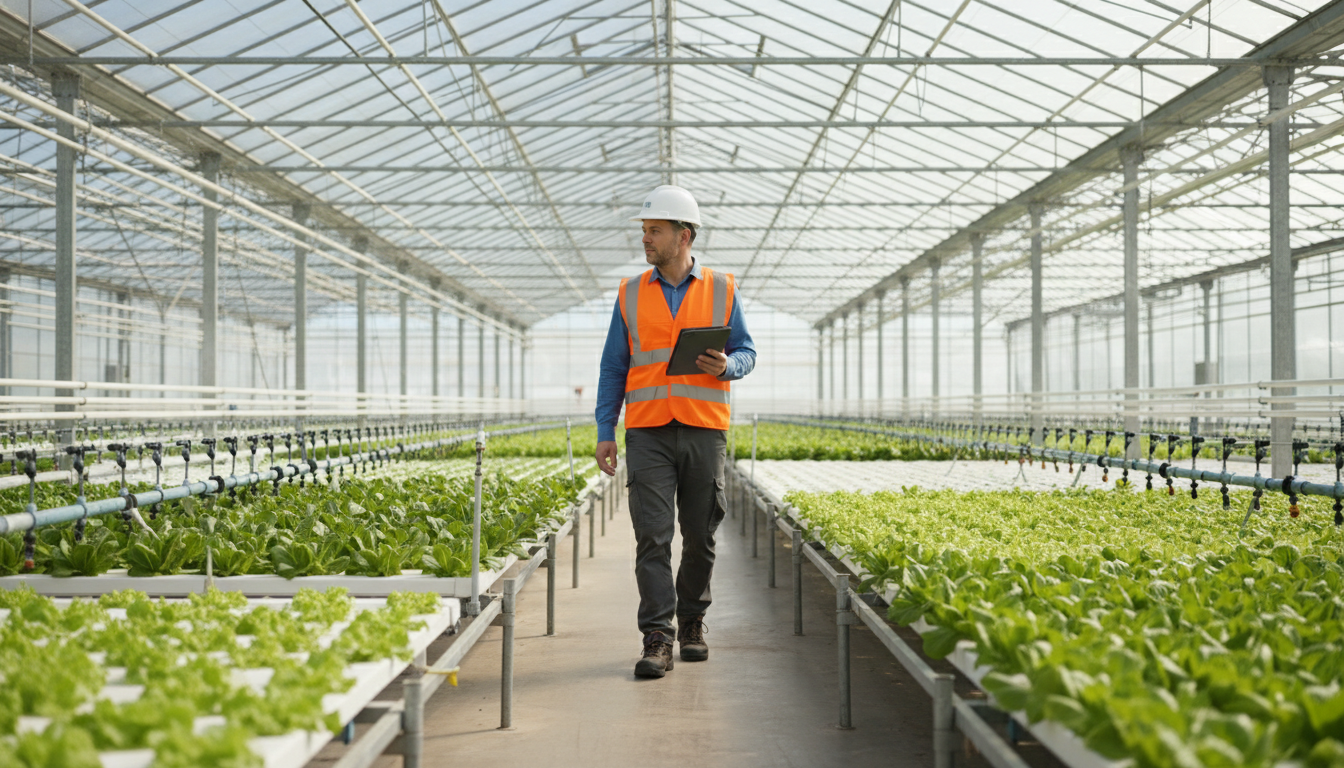
Key Areas of a Comprehensive Greenhouse Inspection
A thorough inspection of a commercial greenhouse facility requires dividing the operation into manageable, logical zones. This ensures that specialized systems receive the focused attention they require. The following are the most critical areas that must be evaluated during any standardized greenhouse operations audit.
1. Structural Integrity and Environmental Controls
The physical structure of the greenhouse is the primary defense against external weather extremes. Inspectors must carefully evaluate all glazing materials—whether they are traditional glass, polycarbonate, or polyethylene film—for cracks, yellowing, or structural degradation that could reduce light transmission or compromise thermal efficiency. The structural framework, including aluminum extrusions and galvanized steel posts, must be checked for signs of rust, condensation pooling, or stress fractures. Additionally, the environmental control systems, which act as the lungs of the facility, require meticulous inspection. Heating, ventilation, and air conditioning (HVAC) systems, exhaust fans, louvers, and evaporative cooling pads must be clean, correctly calibrated, and free of physical blockages. Shade curtains and thermal screens should be tested for smooth deployment to prevent light leaks or mechanical jamming.
2. Irrigation Systems and Nutrient Management
Water management is the lifeblood of any controlled growing environment. Greenhouse inspections must prioritize the entire irrigation network, starting from the main water supply down to the individual drip emitters. Inspectors should actively look for hidden leaks, clogged filters, and biofilm buildup inside delivery lines. Pumps and holding tanks must be evaluated for proper pressure output and structural soundness. Crucially, backflow preventers must be tested to ensure that fertilizer-laden water does not contaminate the municipal or well water supply. Furthermore, the systems responsible for monitoring electrical conductivity (EC) and potential hydrogen (pH) levels must be calibrated against standard solutions during the inspection to guarantee that crops are receiving the exact nutrient profile required for optimal growth.
3. Pest Management and Pesticide Safety
Integrated Pest Management (IPM) strategies require constant monitoring and strict protocols. An inspection must verify that pest exclusion measures, such as insect screens on intake vents and double-door vestibules, are completely intact. When chemical interventions are necessary, the storage, handling, and application of these substances must be audited with the highest level of scrutiny. Strict adherence to the Agricultural Worker Protection Standard (WPS) enforced by the EPA ensures that employees handling chemicals or entering treated areas are properly trained, equipped, and protected. Inspectors must verify that chemical storage lockers are adequately ventilated, securely locked, and equipped with easily accessible spill containment kits. Safety Data Sheets (SDS) must be visibly posted and up-to-date.
Worker Safety and Ergonomic Assessments
A successful greenhouse operation relies heavily on manual labor, making occupational safety a top priority. The unique environment of a greenhouse introduces several specific hazards. High humidity and constant watering create chronic slip, trip, and fall hazards. Inspectors must ensure that walkways are clear of debris, hoses are properly coiled, and drainage systems are functioning to prevent standing water. Electrical systems in these wet environments are particularly vulnerable; all outlets must have Ground Fault Circuit Interrupter (GFCI) protection, and all wiring must be housed in watertight conduits. Furthermore, ergonomic risks such as repetitive motion injuries, heavy lifting, and heat stress must be evaluated. According to comprehensive guidelines on agricultural safety by the CDC and NIOSH, proactively managing ergonomic risks and machinery hazards significantly reduces workplace injury rates, thereby decreasing absenteeism and worker compensation claims.
The Transition to Digital Inspection Protocols
While the criteria for greenhouse inspections have remained largely consistent, the methodology for conducting them is rapidly evolving. Progressive facility managers are abandoning cumbersome paper checklists in favor of digital inspection platforms. Utilizing tablet-based or mobile-friendly inspection applications allows for real-time data capture, instant photo documentation of defects, and automatic generation of maintenance work orders. This digital transition enables historical trend analysis, where managers can identify recurring failures—such as a specific pump that requires overhauling more frequently than others—and adjust their capital expenditure budgets accordingly. Digital records also provide an irrefutable audit trail for regulatory compliance, giving facility owners peace of mind during unexpected agency evaluations.
Conclusion
Maintaining a commercial greenhouse is a demanding responsibility that leaves no room for complacency. The delicate balance between climate control, nutrient delivery, structural maintenance, and occupational safety requires a diligent, well-documented approach. By conducting thorough, regular evaluations using a standardized greenhouse operations inspection checklist, operators can identify and neutralize hazards before they impact plant health or worker safety. Ultimately, integrating robust inspection protocols with federal safety guidelines and modern digital tracking tools will lead to a more resilient, productive, and highly profitable agricultural enterprise.