

Fast Food Drive-Thru Inspection: The Ultimate Guide to Speed, Safety, and Service
The fast food industry has undergone a massive transformation in recent years, with drive-thru operations becoming the undeniable lifeblood of quick-service restaurants (QSRs). For many major brands, the drive-thru lane now accounts for over seventy percent of total revenue. As consumer reliance on off-premise dining continues to skyrocket, the pressure on restaurant operators to deliver flawless, lightning-fast service has never been higher. However, speed cannot come at the expense of accuracy, food quality, or safety. Balancing these competing demands requires a meticulous approach to operational oversight, making a comprehensive fast food drive-thru inspection an absolute necessity for any serious franchise or independent operator.
Managing a high-volume drive-thru lane is one of the most complex operational challenges in the hospitality sector. During peak hours, a drive-thru acts as a highly choreographed assembly line. A single bottleneck—whether it is a malfunctioning headset, a poorly stocked staging area, or an unclear digital menu board—can create a domino effect that backs up traffic into the street, frustrates customers, and severely impacts profitability. Routine, rigorous inspections are the only way to proactively identify these friction points before they escalate into significant operational failures. By systematically evaluating every component of the drive-thru experience, management can ensure that brand standards are consistently upheld and that staff are equipped to handle the rush.
Beyond the critical metrics of speed and accuracy, health, safety, and regulatory compliance remain paramount. The fast-paced nature of a drive-thru environment introduces unique workplace hazards, from slip-and-fall risks near the dispensing window to ergonomic strains associated with repetitive motions and constant headset use. Ensuring worker safety in these high-stress environments requires strict adherence to federal and state guidelines. For example, operators must familiarize themselves with and implement the protocols outlined in the OSHA Restaurant Safety Guidelines. These standards provide a baseline for protecting young and temporary workers who frequently staff QSR drive-thrus, ensuring they are shielded from common hazards associated with slippery floors, electrical equipment, and aggressive customer interactions.
To synthesize these operational demands and compliance requirements into an actionable strategy, managers need a structured, repeatable system. Relying on memory or ad-hoc spot checks is simply not sufficient for modern QSR management. Utilizing a comprehensive fast food drive-thru inspection checklist is the most effective way to guarantee that no operational detail is overlooked. A standardized checklist empowers shift leaders and district managers to conduct objective evaluations, track performance over time, and foster a culture of continuous improvement and accountability within the restaurant.
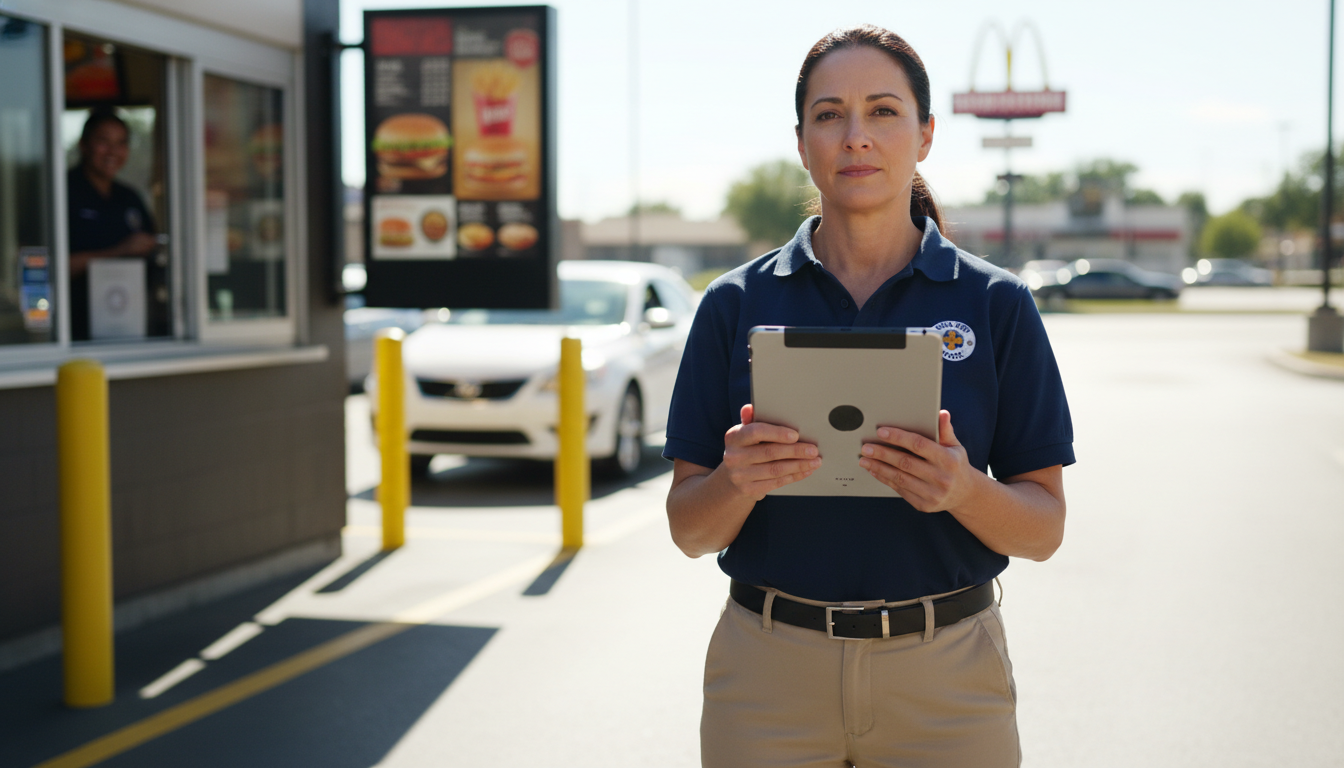
Key Components of a Drive-Thru Inspection
A thorough drive-thru inspection must be holistic, evaluating both the physical infrastructure and the human elements of the operation. The evaluation can generally be broken down into several distinct categories, each critical to the overall success of the quick-service restaurant.
Speed of Service and Order Accuracy
The core promise of the drive-thru is convenience, which relies heavily on speed and accuracy. An inspection must evaluate the efficiency of the order-taking process. Are the loop detectors correctly sensing vehicles? Are the order confirmation boards (OCBs) functioning and clearly visible to the customer? Inspectors should verify that the drive-thru timer systems are properly calibrated to track metrics like queue time, menu board time, and window transaction time. Furthermore, the inspection must assess the processes in place for order verification. Handing a customer the wrong bag not only ruins their experience but drastically increases drive-thru times as issues are resolved at the window. Evaluating how staff double-check orders against the point-of-sale (POS) system is a critical audit point.
Equipment Functionality and Technology Audits
Modern drive-thrus rely on a sophisticated tech stack. An inspection must ensure that all hardware is in optimal working condition. This includes testing the clarity of wireless headsets, ensuring the speaker post is loud and intelligible, and verifying that digital menu boards are displaying correct items, prices, and promotions. Additionally, operators must inspect the POS terminals at the drive-thru window for responsiveness. Payment processing equipment, including tap-to-pay readers and receipt printers, must be tested for speed and reliability. Preventative maintenance checks on this equipment during an inspection can save thousands of dollars in lost revenue from unexpected downtime during a lunch rush.
Exterior Cleanliness, Signage, and Lane Safety
The drive-thru lane is often the first physical touchpoint a customer has with the restaurant. Curb appeal matters. Inspections must cover the cleanliness of the lane, ensuring there is no excess trash, oil spills, or debris. Trash receptacles near the drive-thru should be emptied regularly. Signage, including clearance bars, directional arrows, and promotional banners, must be clean, intact, and well-lit. Lighting is exceptionally critical for safety and security during evening operations. Furthermore, the pavement condition must be evaluated; potholes or severe cracks can damage customer vehicles and pose trip hazards for staff who may need to walk outside to deliver orders to waiting cars in overflow parking.
Strict Adherence to Health and Safety Standards
While speed is the goal, food safety and operational compliance are non-negotiable. A drive-thru inspection must rigorously evaluate the specific staging and delivery areas used for drive-thru orders.
Food Safety and Temperature Control at the Window
Because drive-thru orders are often staged while waiting for a vehicle to pull up to the window, maintaining proper holding temperatures is a major challenge. Cold items like milkshakes or salads must not be staged under heat lamps, and hot foods must be kept out of the temperature danger zone. Drive-thru staging areas must strictly follow the FDA Food Code guidelines to prevent temperature abuse during peak rushes. Inspectors must actively use calibrated thermometers to test staged food items and verify that time-temperature logs are being filled out accurately by the staff.
Fire Safety and Emergency Protocols
The proximity of the drive-thru window to high-volume cooking equipment, such as deep fryers and grills, necessitates strict fire safety checks. An inspection should ensure that fire extinguishers near the drive-thru area are fully charged, accessible, and properly tagged. Additionally, grease management around the cooking stations near the window is vital. Compliance with the NFPA 96 Standard for Ventilation Control and Fire Protection is mandatory to prevent catastrophic commercial kitchen fires. The inspection must confirm that hood filters are clean and that the fire suppression systems are up to date and unobstructed.
Enhancing the Customer Experience
A successful drive-thru transaction is not just about handing over a bag of food; it is about the hospitality delivered through a window. Inspections should evaluate staff demeanor, ensuring employees are greeting customers clearly, warmly, and professionally over the intercom. Uniform standards, personal hygiene, and the presence of nametags should be verified. Furthermore, the inspection should assess how staff handle complex situations, such as split payments, mobile app redemptions, or customer complaints. Providing a polite, frictionless experience encourages repeat business and builds brand loyalty.
Implementing Your Inspection Routine
To maximize the benefits of an inspection program, consistency is key. Shift managers should perform brief operational walk-throughs at the start of every shift, checking immediate equipment functionality and cleanliness. More comprehensive audits should be conducted weekly or monthly by general managers or district supervisors. Transitioning from paper forms to digital checklists allows for real-time reporting, photo documentation of issues, and automatic assignment of corrective actions. When a broken speaker box is identified, a digital system can instantly notify the maintenance team, drastically reducing repair times.
Conclusion
Operating a highly efficient, safe, and profitable fast food drive-thru requires vigilance, structured processes, and an unwavering commitment to quality. The complexities of managing traffic flow, sophisticated technology, strict food safety codes, and customer expectations cannot be left to chance. By implementing a rigorous inspection routine and empowering your staff with the right tools, you can identify operational bottlenecks, mitigate safety risks, and elevate the overall guest experience. Regular evaluations ensure that your restaurant remains competitive in an increasingly fast-paced market. Start optimizing your operations today by leveraging a detailed, standardized checklist, and watch your drive-thru metrics transform from average to exceptional.