

Comprehensive Cargo Screening Equipment Inspection Guide
Global supply chains rely heavily on robust security measures. Air, land, and sea cargo must go through intensive screening processes to prevent illicit materials, weapons, and contraband from entering international transport networks. High-tech cargo screening equipment—such as Advanced Technology (AT) X-ray systems, Explosive Trace Detection (ETD) systems, and dual-view scanners—are the frontline of this defense. Maintaining these sophisticated systems in prime operational condition is not just a best practice; it is a federal and international mandate that requires strict adherence.
The regulatory environment demands absolute compliance from cargo handlers. For instance, the Transportation Security Administration (TSA) enforces strict security directives under the TSA Certified Cargo Screening Program. Organizations operating in air cargo must implement meticulous inspection, maintenance, and testing schedules to verify that every screening device functions at peak sensitivity. Failures in screening protocols can result in catastrophic security lapses, heavy financial penalties, or the revocation of screening privileges.
To keep pace with evolving threats, screening facilities rely on structured preventative maintenance. A dedicated cargo screening equipment inspection checklist is the most effective tool to operationalize these safety protocols. It ensures that technicians and safety officers examine every critical aspect of the screening hardware and software before, during, and after operational shifts. This preventative approach minimizes downtime, protects operators from radiation hazards, and ensures that no cargo passes through unverified.
Furthermore, standardizing these inspections helps facilities build a defensible audit trail. In the event of an incident or an unannounced regulatory audit, having documented proof of daily, weekly, and monthly system checks demonstrates a commitment to due diligence and regulatory alignment. In this comprehensive guide, we will break down the essential components of cargo screening equipment inspections and provide an actionable structure for your facility’s safety workflows.
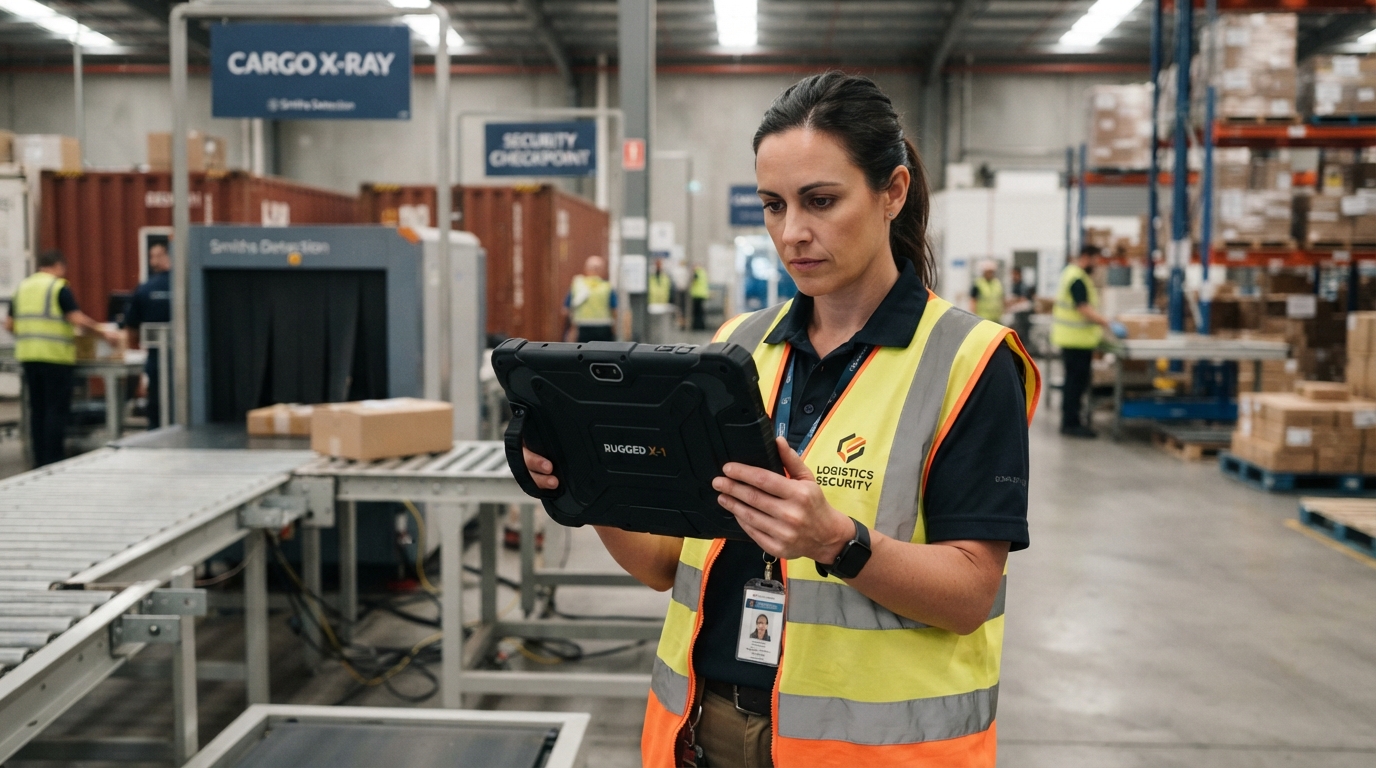
Key Inspection Zones for Cargo Screening Hardware
To conduct an exhaustive evaluation, safety managers must break down cargo screening systems into critical functional zones. Each zone demands unique diagnostic methods and safety checks to verify ongoing performance.
Radiation Safety and Shielding Integrity
For X-ray-based systems, radiation safety is paramount. Over time, lead curtains can fray, and protective shielding panels can shift or suffer physical damage due to heavy cargo throughput. Inspectors must check the physical condition of lead vinyl curtains at the entry and exit tunnels, ensuring there are no tears, gaps, or excessive wear. They must also verify that all radiation warning lights and emergency stop buttons are fully functional. This aligns with safety guidelines established by the Occupational Safety and Health Administration (OSHA), particularly regarding OSHA ionizing radiation standards. Regular dosimeter badge readings for operators should also be logged as part of this safety protocol.
Mechanical Conveyor and Transport Systems
The physical movement of heavy cargo puts significant mechanical strain on conveyor belts, rollers, and motors. Inspectors must examine the belt for alignment issues, tension, and signs of excessive wear or fraying. Rollers should spin freely without abnormal noise, and the motor housing must be checked for overheating or fluid leaks. Any disruption in the conveyor system can cause cargo to jam inside the tunnel, risking damage to both the cargo and the sensitive imaging detectors inside the machine.
Imaging, Sensors, and Software Calibration
The software and detector arrays represent the “eyes” of the cargo screening system. Daily calibration checks using certified test pieces (such as ASTM step wedges or specific threat image projection targets) are mandatory to confirm that image resolution, penetration, and material discrimination (organic vs. inorganic) are operating within exact specifications. Ensure that the monitor displays are clean, high-contrast, and free from dead pixels that could obscure critical details.
Explosive Trace Detection (ETD) Verification
ETD systems, which analyze chemical residues for potential explosive components, require high sensitivity. Inspections for these devices focus on sampling components, suction pumps, and internal calibration standards. Desiccant cartridges must be replaced according to usage intervals, and sample traps must be clean and free of contamination. Neglecting ETD maintenance can lead to false negatives, which represent a massive security vulnerability in cargo hubs.
Aligning with Global Aviation and Freight Standards
Global logistics networks cross multiple jurisdictions, making international alignment essential. Operating procedures should correspond to the global safety frameworks outlined by the IATA Cargo Security standards. By adhering to these internationally recognized guidelines, cargo screening facilities can facilitate smoother cross-border transitions, knowing their security measures meet the highest global standards.
Implementing Your Inspection Workflow
Implementing a rigorous inspection routine requires a balance between speed and accuracy. Facilities should implement a multi-tiered inspection schedule to manage workloads effectively:
- Pre-Shift Checks: Visual inspection of lead curtains, emergency stop testing, and basic calibration runs.
- Weekly Diagnostics: Detailed cleaning of optical sensors, conveyor belt tension adjustment, and deep system diagnostic software runs.
- Monthly Audits: In-depth radiation leakage testing, structural integrity inspections, and review of operator training logs.
To simplify this complex process, utilizing a standardized checklist is highly recommended. You can optimize your operational safety and streamline compliance audits by downloading our comprehensive cargo screening equipment inspection checklist. This tool is designed to guide your technicians through every necessary step, ensuring that no critical component is overlooked during audits.
Conclusion
The safety and security of global transport systems rely on the constant vigilance of cargo screening personnel and the flawless operation of their equipment. Regular, systematic inspections prevent mechanical failures, safeguard workers from radiation hazards, and guarantee that security threats are detected before they leave the warehouse. By incorporating a structured cargo screening equipment inspection checklist into your daily routine, you protect your staff, your operations, and the global supply chain from harm.