

The Ultimate Guide to AI Data Center Facility Inspections
The explosive rise of generative artificial intelligence, large language models, and advanced machine learning algorithms has fundamentally rewritten the rules of IT infrastructure. We are witnessing a massive paradigm shift in how data centers are designed, built, and maintained. Unlike traditional data centers that house standard compute and storage servers, an AI-driven data center is a specialized, ultra-high-density ecosystem. Integrating massive clusters of specialized graphical processing units (GPUs) and artificial intelligence accelerators requires unprecedented levels of electrical power, highly complex cooling methodologies, and heavily reinforced physical infrastructure.
Because of these extreme operational demands, conducting an AI data center facility inspection is an entirely different undertaking compared to auditing a standard enterprise colocation site. In an AI facility, the margin for error is virtually nonexistent. A single localized cooling failure, an undetected micro-leak in a liquid cooling manifold, or a slight electrical anomaly can instantly result in millions of dollars of hardware damage. Even worse, it can cause catastrophic downtime for mission-critical artificial intelligence workloads that require continuous, uninterrupted processing for weeks or months at a time. Therefore, facility managers, site reliability engineers, and compliance officers must adopt specialized, rigorous inspection protocols to ensure maximum uptime, safety, and operational efficiency.
The scope of a modern AI infrastructure inspection must be incredibly vast and exactingly detailed. It ranges from verifying the structural floor loading capacities necessary to support monolithic, multi-ton AI server racks, to auditing the intricate direct-to-chip liquid cooling systems that mandate rigorous leak detection protocols. Inspectors must aggressively scrutinize high-voltage electrical distribution busways, evaluate advanced early-warning fire suppression modules specifically designed for dense environments, and calibrate strict environmental sensors that monitor temperature and humidity to the decimal point.
To systematically streamline this deeply complex auditing process and guarantee that absolutely no critical component or safety measure is overlooked, operations teams must utilize a standardized, purpose-built framework. Incorporating a comprehensive AI Data Center Facility Inspection Checklist serves as the essential baseline for evaluating high-density infrastructure. This structured approach empowers facility managers to proactively address vulnerabilities, ensuring continuous reliability, hardware longevity, and strict adherence to evolving industry regulations.
The Paradigm Shift: Understanding High-Density Infrastructure
To understand why an AI facility requires a specialized inspection, one must understand the sheer scale of the hardware. Traditional data center racks typically draw anywhere from 5kW to 15kW of power. In stark contrast, an AI server rack—heavily populated with hardware like NVIDIA DGX or HGX systems—routinely pulls between 40kW to 120kW per rack. This staggering density physically transforms the room. It demands heavy-duty power distribution, introduces massive thermal loads, and pushes physical space to its absolute structural limits. Let us explore the critical focus areas of a comprehensive AI facility inspection.
Key Areas of Focus for Facility Inspections
Electrical Systems: Powering the Beast
When racks consume upwards of 100kW, standard electrical distribution is vastly insufficient. Massive overhead busways, heavy-duty uninterruptible power supply (UPS) systems utilizing advanced lithium-ion battery topologies, and specialized rack-level power distribution units (PDUs) are required. Inspecting these electrical systems means going beyond simple visual checks. It involves thermal imaging (infrared thermography) of switchgears, breaker panels, and connections to detect micro-arcing or overheating phases before they fail. Furthermore, phase balancing must be rigorously checked to prevent localized overloads.
Given the extreme voltages and currents present, inspector safety is paramount. Facility inspectors and electrical engineers must strictly adhere to comprehensive safety standards when opening panels or working near live equipment. Evaluating and adhering to NFPA 70E: Standard for Electrical Safety in the Workplace is absolutely non-negotiable. This standard dictates the precise personal protective equipment (PPE) required and the strict arc flash boundary protocols that must be implemented during live inspections of these high-capacity electrical systems.
Advanced Cooling Mechanisms: Managing Extreme Heat
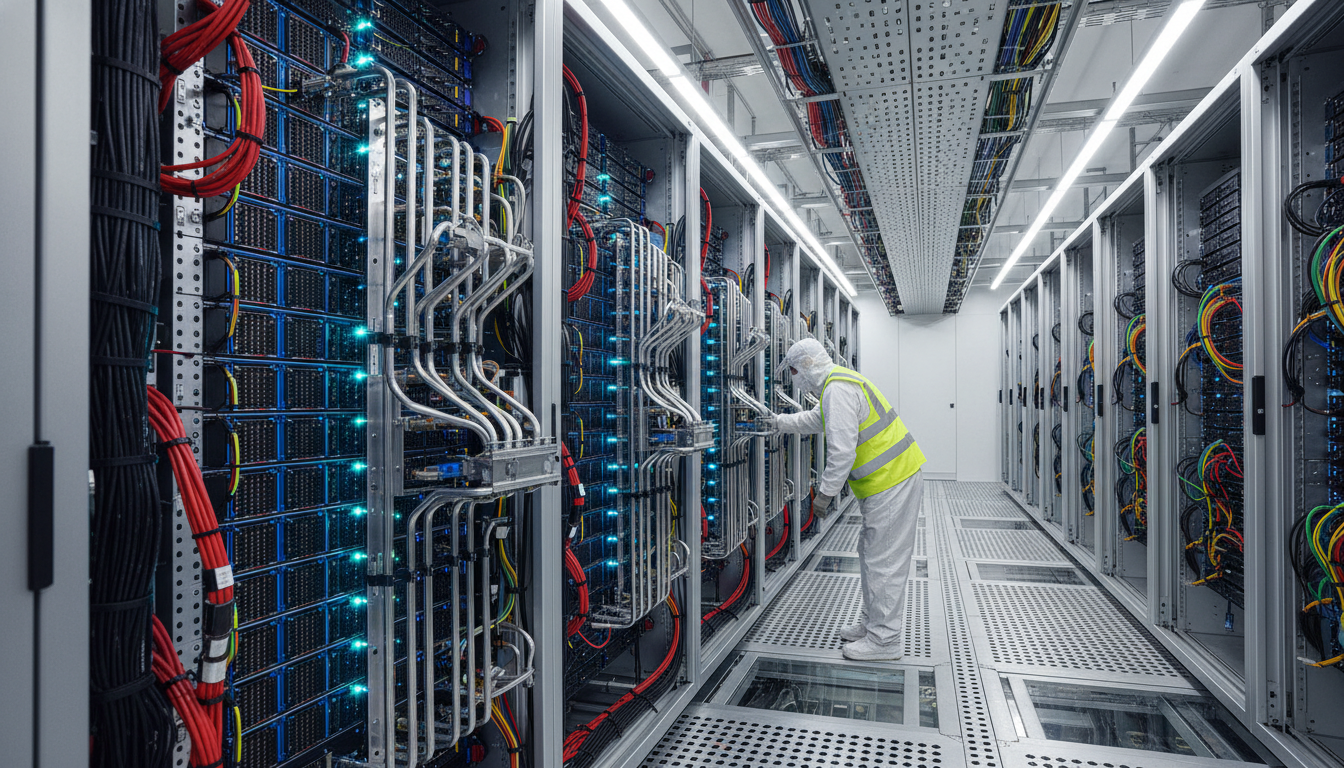
Cooling high-density AI infrastructure is arguably the most significant engineering challenge in modern data centers. Traditional perimeter computer room air conditioning (CRAC) units blowing cold air under a raised floor are entirely insufficient for 100kW racks. Facilities have transitioned to highly advanced solutions such as rear-door heat exchangers (RDHx), direct-to-chip liquid cooling (DLC), and increasingly, single-phase or two-phase liquid immersion cooling.
Facility inspections must now account for complex fluid dynamics and advanced plumbing. Audit checklists must include rigorous inspections of secondary cooling loops, coolant flow rates, manifold integrity, pressure gauges, and highly sensitive leak detection cables routed beneath the racks. The chemical composition and biological treatment of the cooling water (or dielectric fluids) must also be tested regularly. To ensure these facilities operate within safe, established thermal guidelines, inspectors must routinely cross-reference the ASHRAE Datacom Equipment Power Trends and Cooling Applications framework. This verifies that ambient temperatures, server inlet temperatures, and humidity levels meet the rigorous, specific demands of highly sensitive artificial intelligence processors without risking thermal throttling or condensation.
Structural Integrity: Supporting Massive Workloads
Because they house incredibly dense computing components and built-in liquid cooling manifolds, AI racks are incredibly heavy, often exceeding 3,500 to 4,000 pounds per cabinet. A comprehensive physical inspection must verify that the raised floor system, the sub-floor pedestals, or the concrete slab itself can safely support both the static and dynamic loads of these dense GPU clusters. Inspectors check for tile bowing, pedestal integrity, and zinc whisker formations.
Furthermore, given the concentrated, top-heavy weight and the astronomical financial value of the equipment, seismic bracing must be heavily scrutinized in earthquake-prone regions. Every anchor, stabilizing bar, and load-bearing structure must be inspected for physical stress and wear. Complying with globally recognized structural engineering documentation is critical. Adhering to standards such as ISO/IEC 22237: Information technology — Data centre facilities and infrastructures ensures that facilities maintain global best practices regarding layout, structural security, and long-term physical risk mitigation.
Fire Protection and Life Safety Systems
The fire risk profile of a data center changes dramatically when power densities skyrocket and liquid cooling introduces new variables. Traditional water sprinkler systems or basic gaseous suppression may not deploy effectively inside densely packed, heavily enclosed AI server pods. Advanced Very Early Warning Fire Detection (VEWFD) systems, particularly aspirating smoke detectors (like VESDA systems), must be aggressively tested.
During an inspection, it must be verified that fire suppression agents can effectively penetrate high-density rack enclosures without causing collateral thermal shock, localized freezing, or chemical residue damage to the surrounding sensitive GPUs. Inspections of these sophisticated, multi-stage deployment systems must comply closely with NFPA 75: Standard for the Fire Protection of Information Technology Equipment to guarantee maximum life safety, equipment protection, and rapid suppression response in the event of an electrical fire.
Building Management Systems (BMS) and Telemetry
Beyond physical hardware, an AI data center relies on a highly sophisticated Building Management System (BMS) or Data Center Infrastructure Management (DCIM) platform. Inspections must audit the digital telemetry. Are the hundreds of temperature, humidity, and airflow sensors calibrated correctly? Is the predictive maintenance algorithm actively warning operators about a failing fan or a degrading UPS battery? Cybersecurity is also a major inspection point here; operational technology (OT) networks that manage the cooling and power must be air-gapped or heavily audited for vulnerabilities to prevent malicious disruptions to the physical environment.
Physical Security and Access Control
AI data centers house some of the most sensitive proprietary data, foundational algorithms, and intellectual property in the world. As such, physical security is paramount and must be rigorously audited. Inspections validate the functionality of multi-factor biometric access controls, anti-tailgating prevention mechanisms (such as mantrap portals and turnstiles), and comprehensive high-definition CCTV coverage with zero blind spots in high-security aisles. Security policies regarding vendor access and hardware decommissioning must also be reviewed.
Conclusion
Maintaining a modern AI data center is a continuous, high-stakes battle against heat, massive power consumption, and physical space limitations. Standard, surface-level facility walk-throughs are no longer sufficient to protect the multi-million dollar infrastructure investments housed within these high-density walls. By implementing a rigorous, deeply structured auditing protocol, facility operators can preempt catastrophic equipment failures, drastically extend the lifecycle of highly expensive hardware, and guarantee the uninterrupted uptime demanded by modern artificial intelligence applications. Integrating dedicated checklist evaluation tools, ensuring strict compliance with evolving global electrical and thermal standards, and continuously adapting operational protocols to the unique demands of machine learning hardware will ensure your digital infrastructure remains resilient, secure, and highly optimized for the future of computing.