

Ultimate Guide to Ambulance and Emergency Vehicle Inspection Checklists
When an emergency call comes in, every second counts. For first responders, EMTs, and paramedics, the reliability of an ambulance is quite literally a matter of life and death. Emergency medical service (EMS) vehicles operate under extreme conditions, including high-speed response, sudden braking, and long hours of idling. Because of these demanding conditions, routine preventative maintenance is not just a standard operating procedure; it is a critical regulatory and safety requirement. Ensuring that these vehicles are mechanically sound, fully stocked, and operationally ready requires a meticulous and repeatable process.
To achieve this level of readiness, fleet managers and crew members must rely on structured, standardized inspections. A single mechanical failure on the way to an emergency scene can result in tragic delays, compromised patient care, and increased liability for the agency. By establishing a rigorous inspection routine, EMS organizations can proactively identify worn components, electrical faults, or missing life-support equipment before the vehicle ever rolls out of the bay. This preventative approach extends the operational lifespan of the fleet and, more importantly, keeps the community safe.
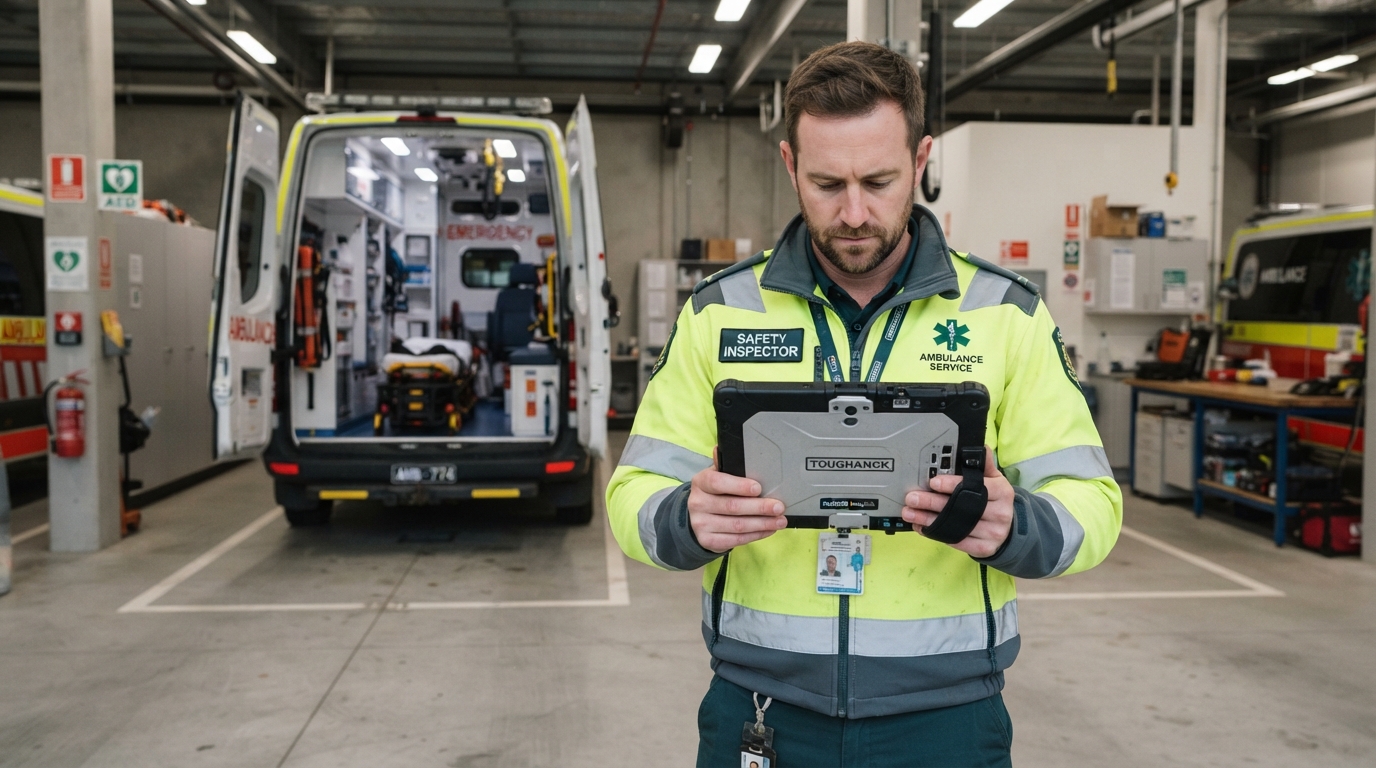
Many emergency service organizations struggle to maintain consistency in their inspection processes, especially when relying on outdated, disorganized systems or manual logs. A standardized tool streamlines the entire process, ensuring that every driver, regardless of shift or experience level, performs the exact same checks with the same level of detail. Implementing a high-quality ambulance emergency vehicle inspection checklist is the most effective way to eliminate human error and ensure that no critical safety system is overlooked.
A comprehensive inspection strategy covers multiple distinct zones of the vehicle, from the physical chassis to the highly specialized medical compartment. In the following sections, we will delve into the essential components of an effective emergency vehicle inspection, explore the regulatory frameworks that govern vehicle compliance, and outline best practices for integrating checklists into your daily shift routines.
Key Components of an Emergency Vehicle Inspection
An effective inspection process divides the ambulance into logical zones, allowing the inspector to systematically verify each system without retracing their steps. These key components include mechanical safety, electrical signaling, and patient-care functionality.
1. Mechanical and Powertrain Systems
The mechanical integrity of the chassis is the foundation of vehicle safety. Inspectors must verify the condition of the engine oil, coolant, brake fluid, and power steering fluid. Because emergency vehicles frequently encounter rough terrain, curbs, and debris, a thorough examination of the tires is essential. Inspectors should look for uneven wear, correct inflation pressure, and sufficient tread depth. Additionally, the braking system must be checked for responsiveness and any signs of wear, as sudden stops are common during emergency runs.
2. Warning Lights, Sirens, and Communications
Emergency vehicles require operational warning systems to clear traffic and navigate intersections safely. This section of the inspection verifies that all emergency light bars, perimeter lights, flashers, and sirens (both electronic and mechanical) function perfectly. Communication gear, including two-way mobile radios, mobile data terminals (MDTs), and GPS navigation units, must also be powered on and tested to ensure constant contact with the dispatch center.
3. Patient Compartment and Life-Support Equipment
The rear cabin of an ambulance is a mobile emergency room. Inspectors must verify that all onboard medical equipment is present, charged, and functional. This includes checking the main oxygen cylinders and backup portable tanks for adequate pressure, testing the suction units, verifying that the automated external defibrillator (AED) or monitor-defibrillator has fresh batteries, and ensuring the gurney mounting and locking mechanism operate smoothly to protect patients during transport.
Regulatory Standards and Fleet Compliance
Emergency medical vehicles are subject to strict regional and federal standards designed to guarantee public and crew safety. Compliance is not optional, and fleet managers must stay aligned with several governing bodies and professional standards.
The National Fire Protection Association (NFPA) publishes NFPA 1917, which sets rigorous guidelines for the design, performance, and maintenance of automotive ambulances. Adhering to these design and operational criteria ensures that vehicles are built and maintained to handle the physical stresses of emergency response. Regular inspections help maintain the baseline standards established by the NFPA throughout the lifecycle of the vehicle.
On a national level, the National Highway Traffic Safety Administration (NHTSA) provides critical oversight and federal specifications regarding EMS vehicle safety, crashworthiness, and occupants’ protection. Fleet maintenance programs that utilize systematic checklists ensure that the vehicle remains compliant with federal highway safety expectations, reducing the likelihood of catastrophic mechanical failures on public roadways.
Furthermore, safety inside the cabin is heavily regulated by the Occupational Safety and Health Administration (OSHA). OSHA standards require strict adherence to infection control protocols, bloodborne pathogen exposure plans, and general workplace safety. An inspection checklist must verify the presence of personal protective equipment (PPE), biohazard disposal containers, sanitization supplies, and functional climate control systems to maintain a safe environment for both healthcare providers and patients.
Best Practices for Implementing Checklist Workflows
Simply having a checklist is not enough; it must be integrated into the organization’s culture. To maximize the effectiveness of your inspections, consider implementing the following operational best practices:
- Conduct Shift-Handover Inspections: Ensure that incoming crews perform a brief but thorough inspection of the vehicle and its critical life-support equipment before taking over. This establishes clear accountability and ensures the vehicle is ready for immediate deployment.
- Distinguish Between Daily and Weekly Checks: Critical safety systems (brakes, lights, sirens, oxygen) must be checked daily. More detailed mechanical inspections, such as fluid levels, belt wear, and deep equipment inventories, can be scheduled weekly to optimize operational efficiency.
- Establish a Clear Reporting and Lockout/Tagout System: If an inspector identifies a critical safety deficiency (e.g., failed brakes or a broken siren), there must be an immediate protocol to remove the vehicle from service. A clear labeling system prevents unsafe vehicles from being accidentally deployed.
- Transition to Digital Formats: Digital inspections allow real-time reporting, automatic tracking, and instant alerts to maintenance teams, drastically reducing the turnaround time for critical repairs.
The Operational Benefits of Standardized Inspections
Implementing a formal inspection process yields significant benefits beyond regulatory compliance. Firstly, it drastically reduces vehicle downtime. Catching a worn belt or a minor coolant leak during a routine check prevents a major engine failure on the road, saving thousands of dollars in emergency towing and repair bills. Secondly, it protects the agency from liability. In the unfortunate event of an accident, documented proof of daily inspections demonstrates that the agency exercised due diligence and maintained their fleet according to industry standards. Ultimately, a consistent inspection routine fosters a culture of professionalism and safety among the crew, ensuring they can focus entirely on saving lives.
Conclusion: Committing to Fleet Readiness
Maintaining an ambulance fleet requires a continuous, uncompromising commitment to safety and operational readiness. Every light, fluid, and piece of medical gear plays a vital role in saving lives. By leveraging a structured inspection program, EMS agencies can rest assured that their vehicles are prepared to face the unpredictable demands of the field. Do not wait for a critical failure to highlight gaps in your maintenance workflow. Equip your team with a reliable checklist today to ensure your vehicles remain safe, compliant, and ready to respond when your community needs them most.