

Optimizing Workplace Safety: The Definitive Guide to Fire Drills and Emergency Preparedness Inspections
In any professional environment, the safety of employees, visitors, and assets is the single most critical priority. Emergency preparedness is not merely a bureaucratic requirement; it is a dynamic operational strategy that can mean the difference between order and chaos—and ultimately, life and death. Among the various pillars of workplace safety, regular fire drills and comprehensive preparedness inspections form the backbone of a resilient organization. When an emergency strikes, seconds count, and clear, practiced protocols are the only reliable defense against disaster.
To systematically evaluate your facility’s readiness, relying on memory or ad-hoc walkthroughs is insufficient. Safety managers must deploy structured, repeatable processes to ensure no detail is overlooked. Utilizing a dedicated Fire Drill & Emergency Preparedness Inspection Checklist provides an actionable framework to audit physical infrastructure, test communication systems, and measure employee response times during simulated crises.
Regulatory bodies worldwide place stringent demands on organizations to maintain robust emergency protocols. In the United States, the Occupational Safety and Health Administration (OSHA) mandates comprehensive planning under standard 1910.38. According to the OSHA Emergency Action Plans Guidelines, employers must establish written emergency action plans that detail escape routes, critical plant operations, and employee headcounts. Regular fire drill inspections ensure these plans remain functional, accurate, and aligned with physical layout changes within the facility.
Understanding the Regulatory Landscape: OSHA and NFPA Standards
Compliance with federal and local regulations is the baseline of workplace safety. Beyond OSHA, the National Fire Protection Association (NFPA) sets the global benchmark for life safety in buildings. Specifically, NFPA 101, known as the Life Safety Code, outlines the minimum requirements for egress, emergency lighting, and fire protection systems. By visiting the official National Fire Protection Association (NFPA) Portal, safety coordinators can access detailed codes that dictate how frequently drills should occur based on occupancy type—whether educational, industrial, or mercantile.
Key Areas of the Emergency Preparedness Audit
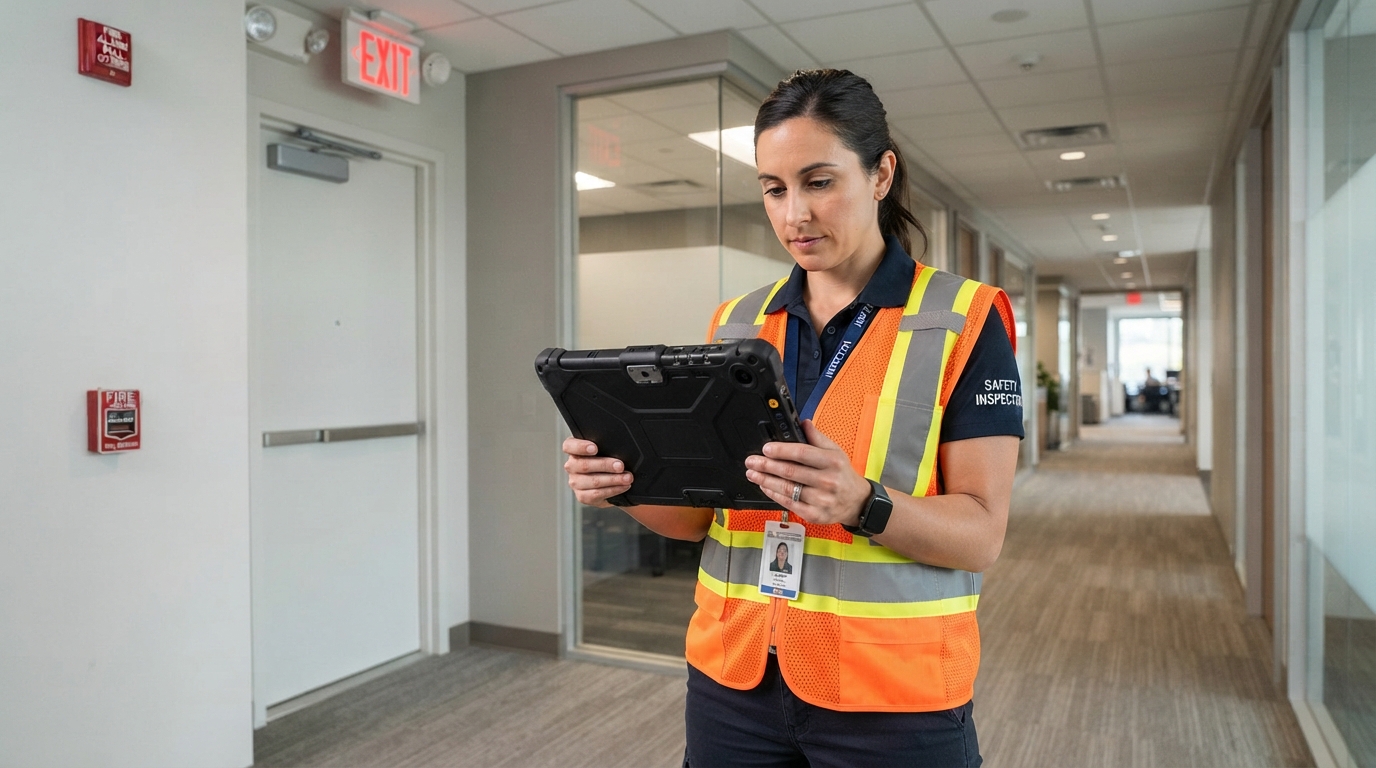
A thorough emergency preparedness inspection is multifaceted. It should not only observe employee behavior during a drill but also audit the active and passive safety systems that protect the building. Safety officers should systematically review the following operational zones:
1. Alarm and Communication Systems
An emergency response is only as fast as the notification that triggers it. Inspections must confirm that fire alarms, smoke detectors, and public address systems are fully operational. Pull stations must be unobstructed and clearly visible. Furthermore, testing the integration between local alarms and emergency monitoring services is vital to ensure first responders are dispatched without delay.
2. Evacuation Routes and Emergency Egress
An obstructed exit is a fatal hazard during a fire. Inspectors must walk every designated evacuation path to verify they are completely clear of debris, storage boxes, or equipment. Fire doors must remain closed to prevent the spread of smoke, yet they must never be locked from the inside. Exit signs must be illuminated, and backup emergency lighting must be tested regularly to ensure path visibility during power failures.
3. Fire Suppression and First-Aid Equipment
Fire extinguishers must be inspected monthly and serviced annually. The inspector must check that extinguishers are mounted at the correct height, fully charged, and match the class of fire hazards present in that specific area (e.g., Class K for kitchens, Class C for electrical rooms). Additionally, first-aid kits and Automated External Defibrillators (AEDs) must be checked for expired components and battery life.
The Anatomy of an Effective Fire Drill
Conducting a fire drill should be treated as a live rehearsal, not a superficial interruption to the workday. To maximize the educational value of a drill, organizations should follow guidelines from federal emergency resources. The federal business preparedness initiative, accessible through the Ready.gov Business Preparedness Program, recommends a phased approach to training. This involves initial tabletop exercises for leadership, followed by announced drills, and eventually unannounced simulations to test true readiness.
During the drill, designated safety wardens should monitor evacuation times, identify bottlenecks in stairwells or exits, and observe employee behavior. Are individuals stopping to gather personal belongings? Are they utilizing the correct designated assembly areas? These observations must be documented in real-time to adjust evacuation routing and targeted training programs.
Post-Drill Debriefing and Continuous Improvement
The true value of a fire drill lies in the post-drill evaluation. Immediately following a simulation, safety committees should meet to discuss performance metrics. Key data points to analyze include total evacuation time, warden accountability reports, and the performance of specialized evacuation assistance for individuals with mobility challenges. Any failures—such as a jammed exit door, an inaudible alarm speaker, or confusion regarding the muster point—must be logged as corrective actions with designated owners and completion deadlines.
Conclusion: Cultivating a Culture of Preparedness
Fire safety is not a static milestone but a continuous cultural commitment. While having a comprehensive emergency preparedness plan on paper is necessary, its real-world efficacy relies entirely on regular inspections, continuous testing, and active employee engagement. By prioritizing systematic evaluations and empowering your safety teams with standard inspection checklists, you transform safety from a compliance obligation into an organizational instinct that protects your most valuable asset: your people.