

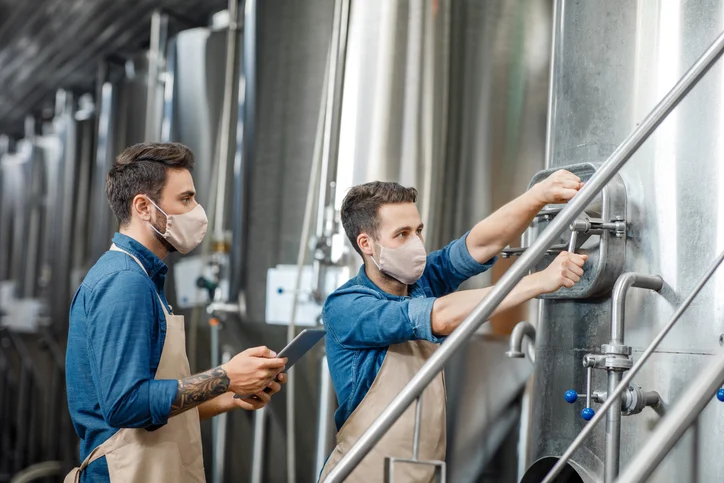
Brewery Safety Inspection Checklist: Reducing Risk in Brewing Operations
Breweries face a unique set of hazards — from CO₂ buildup in fermenters, to chemical handling, hot surfaces, and confined space entry. A structured brewery safety inspection checklist helps protect workers, keep equipment safe, and ensure regulatory compliance. Use the Brewery Safety Inspection Checklist to systematically assess risk across your facility.
Why Brewery Safety Inspections Are Necessary
The brewing industry sees common OSHA violations that directly threaten worker safety. According to the Craft Brewing Business, many breweries struggle with confined‑space entry, chemical management, and lockout/tagout procedures. These critical areas demand regular inspections and controls.
In addition, the Brewers Association recommends a hazard assessment and safety program specifically for breweries, tailored to common risks such as CO₂, hot surfaces, and cleaning chemicals.
For lab and chemical safety, the ASBC Lab Safety Checklist outlines essential checks for flammable solvents, fire safety, and proper lab equipment usage.
Key Areas to Inspect
- Confined Spaces: Inspect fermenters, mash tuns, and cleaning ports using proper confined-space procedures.
- CO₂ and Gas Safety: Check ventilation in fermentation rooms, monitor CO₂ detectors, and verify alarm and gas‐release systems.
- Chemical Storage & Handling: Confirm proper labeling, SDS accessibility, PPE use, and secure storage for cleaning agents and sanitizers.
- Hot Surfaces & Pressure Systems: Inspect boilers, kettles, heat exchangers, and pressure relief valves for safe operation.
- Electrical & Machine Safety: Verify lockout/tagout (LOTO) procedures, check motor guards, power controls, and emergency shutdowns.
- Emergency Equipment: Test fire extinguishers, eyewash stations, first-aid kits, exit signage, and evacuation plans.
- Ergonomics & Housekeeping: Assess walkways, grip hazards, lifting practices, and clean‑up protocols to reduce slips, trips, and strains.
How to Conduct Inspections Effectively
Schedule safety inspections on a monthly or quarterly basis depending on risk. Use the checklist to perform a walk-through, document all findings, and take photos where needed. Prioritize issues by severity, assign corrective actions, and follow up on work orders to ensure resolution.
Use insights from your inspection data to build a safety program that aligns with the OHSE Brewery Safety Guide. This guide highlights key brewery hazards — flammable vapors, ergonomic risk, chemical exposures — and outlines how to build a culture of safety around them.
Conclusion
Brewing safely isn’t optional — it’s essential for protecting your people, your product, and your reputation. The Brewery Safety Inspection Checklist gives your team a proven framework to catch hazards early, enforce safe practices, and maintain compliance. Use it consistently to build a safer, more reliable brewing operation.